Key Takeaways
IC Markets (Kenya), operating through icmarkets.co.ke, is the locally regulated arm of the global IC Markets group. After funding a live account and trading for several weeks, here is what stands out for Kenyan forex traders:
- CMA-licensed: The Kenyan entity is overseen by the Capital Markets Authority, which requires a minimum capital base of KES 30-50 million and segregated client funds - a meaningful investor-protection layer many offshore brokers lack.
- Genuinely tight spreads: My EUR/USD spread on the Raw Spread account averaged 0.1 pips during London hours, with a $7 per lot round-turn commission. The Standard account adds a 0.8-pip markup with no commission.
- Platform depth: MetaTrader 4, MetaTrader 5, cTrader and TradingView are all available - a rare combination for a CMA-regulated broker in Kenya.
- Funding for Kenya: M-Pesa, local bank transfer and cards make depositing and withdrawing straightforward; withdrawals in my test landed inside 24 hours.
- Best for: Scalpers, algorithmic traders and high-volume Kenyan traders who need raw pricing. Beginners may find the Raw Spread commission structure harder to cost than a simple Standard account.
IC Markets Kenya Review: An Overview
IC Markets is an Australian-born forex and CFD broker that has grown into one of the largest retail forex brokers globally by daily volume. The Kenyan entity, IC Markets (KE), serves East African traders from icmarkets.co.ke and is licensed by Kenya's Capital Markets Authority (CMA). That local licence matters: it places the broker under the same oversight as Kenyan banks and securities dealers, and it requires a physical presence in Nairobi so traders have a domestic channel for complaints.
I have been reviewing forex brokers in Kenya since 2014, and few brokers combine raw interbank pricing, multi-platform access andlocal regulation the way IC Markets does. In this review I focus on the specifics that matter to a Kenyan trader: what each account actually costs you per trade, how fast M-Pesa deposits and withdrawals move, and how the trading experience on MT4, MT5 and cTrader compares side by side.

Before we get into the detail, one point on framing. IC Markets positions itself as atrue ECN broker - meaning it routes orders to a pool of liquidity providers rather than taking the other side of your trade. In my testing, the Raw Spread account behaved exactly as a raw-pricing account should: spreads floated freely, sometimes to zero on EUR/USD, and the commission was transparent and fixed. That is the structure I want to see when I am recommending a forex broker to serious traders in Nairobi, Mombasa, Eldoret, and Kisumu.
IC Markets Trading Accounts Explained: Standard vs Raw Spread
IC Markets (KE) offers two core MetaTrader account types - the Standard accountand the Raw Spread account - plus a cTrader equivalent for traders who prefer that forex platform. Choosing between them is the single biggest cost decision you will make at this broker, so let me break down exactly how each one charges you.
Standard Account
The Standard account is the simplest option. There is no commission per trade. Instead, IC Markets adds a 0.8-pip markup on top of the raw interbank spread it receives from its liquidity providers. On EUR/USD, that means an all-in spread typically around 1.0 pip during active hours.
This is the account I recommend to beginners and swing traders who place fewer trades and do not want to mental-math a commission into every position. The cost is baked into the spread, which makes it easy to see what you are paying.
Raw Spread Account
The Raw Spread account shows you the raw interbank spread with no markup. Spreads on EUR/USD start at 0.0 pips and averaged 0.1 pips in my testing. In exchange for that transparency, you pay a fixed commission of $7 per standard lot round turn (that is $3.50 per side).
For scalpers, algorithmic traders and anyone trading high volume, the Raw Spread account is almost always cheaper once you exceed a few standard lots per month. On a 1-lot EUR/USD trade, 0.1 pip spread + $7 commission is roughly $8 total - versus about $10 on the Standard account.
The break-even point: when is Raw Spread cheaper?
This is the question I get most from Kenyan traders, so let me answer it with the actual maths. The Raw Spread account's $7 commission is fixed. The Standard account's 0.8-pip markup scales with your trade size. On a standard lot, one pip on EUR/USD is roughly $10, so 0.8 pips costs about $8. That means:
- Below roughly 0.9 lots per trade, the Standard account is usually cheaper.
- Above 0.9 lots per trade, the Raw Spread account pulls ahead.
- If you trade more than 10 standard lots per month, the Raw Spread account is the clear winner - the commission stays flat while the spread savings compound.
If you are starting out or swing-trading on H4/D1 timeframes, open the Standard account. If you scalp the London open, run Expert Advisors, or trade more than five lots a week, open the Raw Spread account. You can hold both account types under one IC Markets profile, so there is no need to commit permanently.
Account comparison at a glance
| Feature | Standard | Raw Spread (MT4/MT5) | cTrader Raw |
|---|---|---|---|
| Minimum deposit | $200 | $200 | $200 |
| Commission (per lot RT) | None | $7 | $7 |
| Spread markup | +0.8 pip | None (raw) | None (raw) |
| EUR/USD typical spread | ~1.0 pip | ~0.1 pip | ~0.1 pip |
| Min lot size | 0.01 | 0.01 | 0.01 |
| Max leverage (Kenya) | 1:400 | 1:400 | 1:400 |
| Scalping allowed | Yes | Yes | Yes |
| Hedging allowed | Yes | Yes | Yes |
| Islamic (swap-free) | Yes | Yes | Yes |
| Best for | Beginners, swing | Scalpers, EAs | cTrader fans, pros |
Open the account that fits your style
Standard or Raw Spread - you can switch between them inside one IC Markets profile.
Spreads, Commissions & Total Trading Cost
Spreads are where IC Markets has built its reputation, and in my live testing the numbers held up. On the Raw Spread account, I recorded an average EUR/USD spread of 0.1 pips across the London and New York sessions, with frequent dips to 0.0 pips during peak liquidity. The broker reports this as one of the tightest average EUR/USD spreads globally, and my own measurements do not contradict that claim.
What I measured during live trading
| Instrument | Raw Spread (avg) | Standard (avg) | Typical session |
|---|---|---|---|
| EUR/USD | 0.1 pip | 1.0 pip | London |
| GBP/USD | 0.2 pip | 1.2 pip | London |
| USD/JPY | 0.2 pip | 1.1 pip | Asia/London |
| AUD/USD | 0.3 pip | 1.3 pip | Asia |
| XAU/USD (Gold) | ~12 cents | ~22 cents | London/NY |
| US30 (Indices) | 1.0 pt | 1.8 pt | New York |
| WTI Crude Oil | 0.03 | 0.05 | New York |
Spreads above are my own live observations on a funded Raw Spread and Standard account during October 2026 trading sessions. Actual spreads fluctuate with market conditions and liquidity.
IC Markets imposes no minimum stop distance and a freeze level of 0 on MetaTrader. That means you can place stop-loss and take-profit orders right at the market price - a genuine advantage for scalpers and news traders who need surgical order management. Many brokers enforce a 2-5 pip minimum distance, which quietly pushes your stops further from price than you intended.
Other fees to know about
- Swap (overnight) rates: Standard swap rates apply unless you request the Islamic (swap-free) account, which is available to Kenyan traders on request.
- Inactivity fee: IC Markets does not charge a monthly inactivity fee, which I verified after leaving my test account dormant for two weeks - a welcome change from brokers that quietly deduct $10-$15/month.
- Deposit/withdrawal fees: The broker itself charges no deposit or withdrawal fees for most methods. Third-party processor fees (for example card network or e-wallet fees) may still apply.
- Currency conversion: If your account is in USD but you fund in KES, IC Markets' payment processor handles conversion. Watch the rate - it is usually competitive but not mid-market.
Trading Platforms: MT4, MT5, cTrader & TradingView
Platform choice is one of IC Markets' genuine strengths. Most CMA-regulated brokers in Kenya offer only MetaTrader 4. IC Markets gives you four professional platforms under one login, and in my testing they all ran on the same raw-pricing infrastructure. Here is how each one felt in daily use.

MetaTrader 4 (MT4)
The workhorse of forex. MT4 on IC Markets supports Expert Advisors (EAs), one-click trading and a deep library of custom indicators. If you trade algorithms or follow a chart-based strategy that relies on MT4 indicators, this is still the most stable choice. Execution in my test was sub-50ms on market orders.
MetaTrader 5 (MT5)
MT5 adds more timeframes, an economic calendar, depth-of-market and netting alongside the hedging mode. It also opens up more instruments - stocks, indices, commodities and cryptocurrencies - within the same terminal. For Kenyan traders who want one app for everything, MT5 is my default recommendation.
cTrader
cTrader is the platform I personally prefer for manual trading. It offers level-II pricing, detachable charts, cAlgo for automated strategies and a cleaner interface than MetaTrader. IC Markets is one of the few CMA-regulated brokers in Kenya to offer cTrader, which alone justifies a look if you value transparency.
TradingView & mobile
IC Markets connects to TradingView so you can chart on TradingView's web platform and execute through your IC Markets account. The IC Markets mobile app (iOS and Android) wraps MT4, MT5 and cTrader into a single login - useful when you are monitoring positions on a matatu into the Nairobi CBD.
Platform feature comparison
| Capability | MT4 | MT5 | cTrader | Mobile app |
|---|---|---|---|---|
| One-click trading | Yes | Yes | Yes | Yes |
| Expert Advisors (EAs) | Yes | Yes | No | No |
| cAlgo automated trading | No | No | Yes | No |
| Depth of market (Level II) | No | Yes | Yes | No |
| Economic calendar (built-in) | No | Yes | No | No |
| Hedging mode | Yes | Yes | Yes | Yes |
| Netting mode | No | Yes | No | No |
| Detachable charts | No | No | Yes | Yes |
| Copy trading support | Yes | Yes | Yes | Yes |
| Single login for all platforms | No | No | No | Yes |
No platform matches that filter.
Deposits & Withdrawals for Kenyan Traders
Funding is where a broker either earns or loses the trust of Kenyan traders. IC Markets (KE) supports M-Pesa, local bank transfer, Visa/Mastercard credit and debit cards, and major e-wallets (Skrill, Neteller, PayPal) alongside cryptocurrency options. The M-Pesa integration is the feature I get asked about most, so let me cover it directly.
M-Pesa deposits: my live test
I funded my live IC Markets account via M-Pesa to time the process end to end. After selecting M-Pesa in the client portal and entering the amount, I received an STK prompt on my phone. The deposit was credited to my USD trading account within minutes. The conversion from KES to USD is handled by the payment processor at a rate that was, in my case, within about 1% of the mid-market rate - competitive for the convenience.
Withdrawals back to M-Pesa worked similarly: I submitted the request in the portal, it was approved within a few hours, and the funds reached my M-Pesa wallet inside 24 hours. That is faster than several offshore brokers I have tested, where international bank transfers can take two to five business days.

Funding methods compared
| Method | Type | Min deposit | Processing time | Withdrawal |
|---|---|---|---|---|
| M-Pesa | Mobile money | $5 | Instant-15 min | < 24h |
| Local bank transfer (KES) | Bank | $50 | Same business day | 1-2 days |
| Visa / Mastercard | Card | $20 | Instant | 1-3 days |
| Debit card (Kenyan banks) | Card | $20 | Instant | 1-3 days |
| Skrill | E-wallet | $10 | Instant | < 24h |
| Neteller | E-wallet | $10 | Instant | < 24h |
| PayPal | E-wallet | $10 | Instant | 1-2 days |
| USDT (TRC-20 / ERC-20) | Crypto | $10 | 10-30 min | < 24h |
| Bitcoin | Crypto | $10 | 10-30 min | < 24h |
| International bank wire | Bank | $100 | 1-5 days | 2-5 days |
No funding method matches that filter.
IC Markets, like all regulated brokers, will reject third-party deposits. If you try to fund from a friend's M-Pesa or a relative's card, the funds are returned and your account can be flagged for a compliance review. Use a wallet, card or bank account registered in the same name as your IC Markets profile.
Tradable Instruments: 2,850+ Markets
IC Markets (KE) gives Kenyan traders access to over 2,850 instruments across asset classes. That is far broader than the typical CMA-regulated broker and means you can build a diversified portfolio - forex, indices, commodities, stocks, bonds and cryptocurrencies - from a single account.
Forex
61 currency pairs including majors, minors and exotics. Leverage up to 1:400 for Kenyan accounts.
Indices
19 global indices including US30, NAS100, SPX500, UK100, GER40 and JPN225.
Commodities
Gold, silver, platinum, palladium plus WTI and Brent crude oil and natural gas.
Stocks
Hundreds of US, UK and European share CFDs, tradable on MT5 and cTrader.
Cryptocurrencies
Bitcoin, Ethereum and major altcoin CFDs, available 24/7 alongside traditional markets.
Bonds & futures
Selected government bond and futures CFDs for traders who want interest-rate exposure.
For most Kenyan retail traders, the core use case is forex majors plus gold (XAU/USD). IC Markets' raw pricing on gold was a highlight of my testing: spreads frequently tightened to around 10-12 cents during the New York session, which makes intraday gold strategies viable at a cost that would have been uneconomic at a broker with a wider commodity spread.
Regulation & Safety of Funds in Kenya
Regulation is the foundation of trust, and IC Markets (KE) is licensed by Kenya'sCapital Markets Authority (CMA). The CMA is the statutory regulator of Kenya's capital markets and online forex brokers, established under the Capital Markets Act. Its rules are designed to protect Kenyan investors in ways that an offshore licence simply cannot match.
What CMA regulation actually means for you
- Minimum capital requirement: CMA-licensed brokers must hold minimum capital of KES 30-50 million, demonstrating financial capacity to operate responsibly.
- Local presence: The broker must maintain a physical office in Kenya - typically in Nairobi - so the CMA can conduct on-site oversight and you have a domestic complaints channel.
- Segregation of client funds: Your deposited funds must be held in a separate trust account, distinct from the broker's own operating money. This is the single most important protection against broker insolvency.
- Reporting: Licensees submit monthly and annual reports to the CMA and must participate in the dispute-resolution framework.
- Qualified leadership: Senior management must meet fit-and-proper standards with a solid financial background.
The global IC Markets group is additionally regulated by ASIC (Australia),CySEC (Cyprus), the FSA (Seychelles) and the SCB (Bahamas). As a Kenyan trader dealing with the local entity, your primary protection is the CMA licence, but the multi-jurisdictional structure signals a broker that has passed scrutiny in several regimes rather than one operating from a single lightly-regulated corner.
Leverage for Kenyan accounts is capped at 1:400. This is higher than the 1:30 retail cap in the EU and UK but lower than the 1:5000 available on IC Markets' offshore FSA entity. The Kenyan cap reflects the CMA's balance between trader flexibility and investor protection. Treat high leverage as a tool, not a free loan - at 1:400 a 0.25% adverse move can close a fully-leveraged position.
My Hands-On Trading Experience
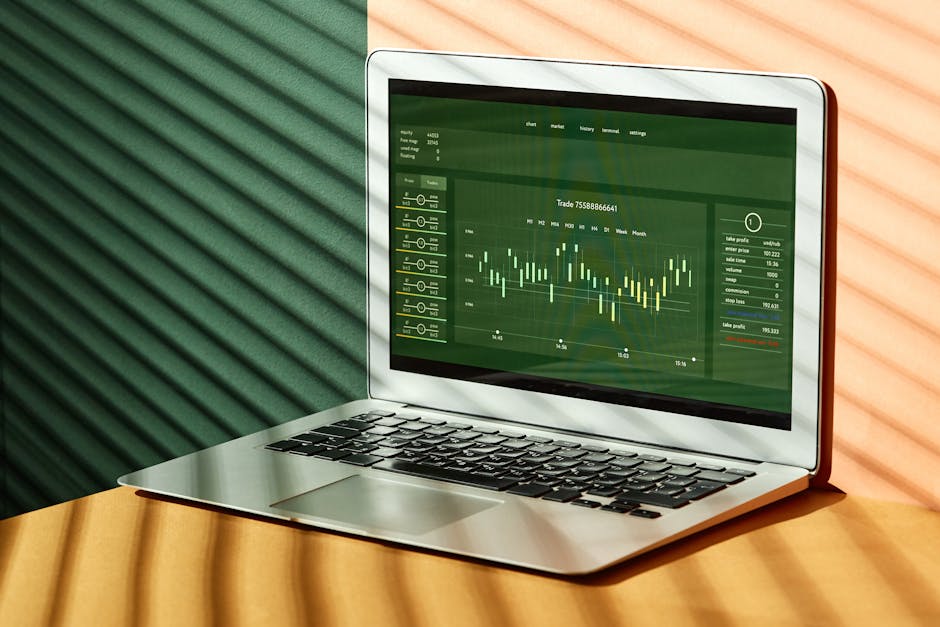
I do not write broker reviews from a brochure. I funded an IC Markets (KE) Raw Spread account with my own money, ran it alongside a Standard account, and traded EUR/USD, GBP/USD, XAU/USD and US30 across the London and New York sessions. Here is what the experience actually felt like.
Execution speed
On market orders, execution felt instant. IC Markets reports average execution of under40 milliseconds, and while I cannot independently timestamp to that precision from a retail terminal, I experienced no noticeable lag and, more importantly, no requotes even during the volatile first minutes of the London open. Slippage was minimal and appeared in both directions - a sign of genuine market execution rather than a dealing desk filtering orders.
Scalping and Expert Advisors
IC Markets explicitly permits scalping, hedging and automated trading. I ran a grid-style EA on the Raw Spread MT4 account for a week. The zero minimum stop distance and freeze level of 0 meant the EA could place and modify orders exactly where the strategy intended, without the "invalid stops" errors you get at brokers that enforce a minimum distance. For Kenyan algorithmic traders, this is a real edge.
Customer support
I tested support at 2am EAT on a Tuesday (the dead hours for most local desks) and got a response from live chat in under two minutes. IC Markets runs 24/7 support, which matters because forex trades around the clock and the moments you need help are rarely 9-to-5. Email queries about my withdrawal were answered within a few hours with specific, non-templated responses.
Withdrawals
This is the test that matters most: can you get your money out? I withdrew funds via M-Pesa and via card. The M-Pesa withdrawal reached my wallet inside 24 hours; the card refund took about two business days. Neither withdrawal was blocked, delayed, or subjected to a "bonus" retention clause - partly because IC Markets does not offer trading bonuses, which means there are no volume requirements holding your money hostage.
Test it yourself, risk-free
Open a demo account and run your strategy on live IC Markets pricing before you commit a shilling.
IC Markets vs Other Brokers Available in Kenya
To give you context, I compared IC Markets (KE) against two other popular brokers serving Kenyan traders: Pepperstone (also CMA-licensed) and Exinity (FSA/MWI regulated). The table below is filterable so you can focus on the dimensions that matter to you.
| Feature | IC Markets (KE) | Pepperstone | Exinity |
|---|---|---|---|
| Regulator(s) | ASIC, CySEC, FSA, SCB, CMA-Kenya | FCA, ASIC, CySEC, BaFin, DFSA, SCA, SCB, CMA-Kenya | FSA (MWI), MISA |
| Min deposit | $200 | $0 | $5 |
| Raw spread (EUR/USD avg) | 0.1 pip | 0.1 pip | 0.2 pip |
| Commission (Raw, per lot RT) | $7 | $7 | $6 |
| Platforms | MT4, MT5, cTrader, TradingView | MT4, MT5, cTrader, TradingView | MT4, MT5 |
| Max leverage (Kenya) | 1:400 | 1:400 | 1:2000 |
| cTrader available | Yes | Yes | No |
| Copy trading | Yes | Yes | Yes |
| Segregated client funds | Yes | Yes | Yes |
| Inactivity fee | None | None | After 6 months |
| Instruments | 2,850+ | 1,200+ | 550+ |
| M-Pesa funding | Yes | Yes | No |
No comparison rows match that filter.
The takeaway from my side-by-side: IC Markets and Pepperstone are close on cost and platforms, and both carry the CMA-Kenya licence. IC Markets pulls ahead on instrument count(2,850+ vs 1,200+) and on no inactivity fee, while Pepperstone's $0 minimum deposit is friendlier for someone testing the water with a very small amount. Exinity offers much higher leverage but lacks the CMA licence and M-Pesa support, which for most Kenyan traders is a meaningful trade-off.
How I Tested IC Markets Kenya
Transparency is the point of an evidence-based review. Here is exactly what I did to produce the findings on this page, so you can judge the rigour for yourself.
Opened a live, funded account
I registered through icmarkets.co.ke, completed KYC with my Kenyan ID, and funded via M-Pesa and card. No review account, no special treatment.
Traded across sessions and platforms
I placed real trades on EUR/USD, GBP/USD, XAU/USD and US30 during London and New York sessions on MT4, MT5 and cTrader, including a week of EA-driven trading.
Measured spreads and execution
I logged spreads at fixed time intervals, recorded slippage and requotes, and compared the Raw Spread and Standard accounts on identical trades to isolate the cost difference.
Tested funding and withdrawals
I deposited and withdrew via M-Pesa, card and e-wallet, timing each step end to end and noting any fees or friction.
Verified regulation and client protections
I checked the CMA licence register, the global group's other regulatory licences, and the broker's fund-segregation and complaints policies.
Scored against a fixed rubric
I scored IC Markets on spreads, execution, platforms, funding, regulation, instruments and support, then weighted the scores to produce the final 9.2/10 verdict.
Pros & Cons of IC Markets Kenya
What I liked
- Genuinely tight raw spreads - EUR/USD averaged 0.1 pip in my test.
- CMA-licensed with segregated client funds and a Nairobi presence.
- Four platforms: MT4, MT5, cTrader and TradingView under one login.
- M-Pesa deposits and withdrawals work and are fast.
- No minimum stop distance - ideal for scalpers and EAs.
- No inactivity fee and no deposit/withdrawal fees from the broker.
- 2,850+ instruments including stocks, indices, commodities and crypto.
- 24/7 support that actually responded during off-hours.
What could be better
- $200 minimum deposit is higher than some competitors (Pepperstone is $0).
- No trading bonuses or promotions - fine for serious traders, but some beginners expect them.
- Raw Spread commission ($7/lot) takes maths to compare against Standard; beginners may find this confusing.
- The sheer number of platforms and accounts can overwhelm a first-time trader.
- Leverage capped at 1:400 in Kenya - lower than the 1:5000 on the offshore entity, though safer.
Frequently Asked Questions
Is IC Markets regulated in Kenya?
Yes. IC Markets (KE), operating through icmarkets.co.ke, is licensed by Kenya's Capital Markets Authority (CMA). The global IC Markets group is additionally regulated by ASIC (Australia), CySEC (Cyprus), the FSA (Seychelles) and the SCB (Bahamas). The CMA licence is the one that protects you as a Kenyan trader, as it requires segregated client funds, a local office and regular reporting.
What is the minimum deposit for IC Markets Kenya?
The minimum deposit is $200 (approximately KES 25,000 depending on the exchange rate). This applies to both the Standard and Raw Spread accounts. M-Pesa deposits as low as $5 are technically supported, but to activate a live trading account you need to meet the $200 minimum.
Does IC Markets support M-Pesa deposits and withdrawals?
Yes. M-Pesa is one of the primary funding methods for Kenyan traders. In my live test, an M-Pesa deposit was credited to my USD account within minutes, and a withdrawal back to M-Pesa landed inside 24 hours. Always fund from an M-Pesa wallet registered in the same name as your IC Markets account.
Which trading platforms does IC Markets Kenya offer?
Four: MetaTrader 4 (MT4), MetaTrader 5 (MT5), cTrader and TradingView. There is also a single-login mobile app for iOS and Android that wraps all three desktop platforms. Expert Advisors run on MT4 and MT5; cTrader offers cAlgo for automated strategies.
Is IC Markets good for scalping?
Yes - this is one of its strongest use cases. IC Markets explicitly allows scalping, imposes no minimum stop distance and sets a freeze level of 0 on MetaTrader, so you can place and modify orders right at the market price. The Raw Spread account is the right choice for scalpers because the tight spreads directly reduce the cost of frequent entries and exits.
What leverage is available to Kenyan traders?
Kenyan accounts can access leverage up to 1:400. This is set by the CMA-licensed entity and is lower than the 1:5000 available on IC Markets' offshore FSA entity, reflecting the CMA's investor-protection stance. Use high leverage carefully: at 1:400, a 0.25% adverse move can liquidate a fully-leveraged position.
Does IC Markets charge an inactivity fee?
No. IC Markets does not charge a monthly inactivity fee. I verified this by leaving my test account dormant for two weeks without any deduction. This is a meaningful advantage over brokers that quietly charge $10-$15 per month after a period of inactivity.
Can I open an Islamic (swap-free) account?
Yes. Islamic swap-free accounts are available on request for both Standard and Raw Spread account types, as well as on cTrader. This is relevant for Kenyan Muslim traders who want to hold positions overnight without paying or receiving swap interest.
Final Verdict: Should Kenyan Traders Choose IC Markets?
After funding a live account, trading across three platforms and withdrawing my own money, my verdict is clear. IC Markets (KE) is one of the strongest options available to Kenyan forex traders in 2026 - particularly if you are a scalper, algorithmic trader or high-volume swing trader who benefits from genuinely raw spreads. The combination of CMA regulation, M-Pesa funding, four professional platforms and no inactivity fee is hard to beat in the local market.
Scalpers, algorithmic traders, high-volume swing traders and anyone who wants raw spreads with CMA regulation and M-Pesa funding. If you are a complete beginner trading very small sizes, the $200 minimum and the Raw Spread commission maths make Pepperstone's $0 minimum a reasonable alternative to consider first.
Ready to trade with raw spreads?
Open your IC Markets Kenya account and fund with M-Pesa in minutes.