Here's what I wish someone had told me in 2014 when I started trading forex: You don't need another course. You don't need another indicator. You don't need another "secret strategy." What you need is someone who's been where you are—who's blown accounts, who's felt the frustration of watching the market do exactly the opposite of what you expected—who can sit beside you and say, "I see what you're doing wrong. Here's how we fix it."
That's what a mentor does. And after 15 years of trading and mentoring over 500 students at Kenya Forex Firm, I can tell you with absolute certainty: the right mentor is the single fastest path to consistent profitability.
But here's the problem: the forex mentorship space is flooded with charlatans. Instagram "gurus" posing with rented Lamborghinis. YouTube "experts" who've never placed a real trade. Telegram "signal providers" who delete their losses and only show wins.
This guide will show you exactly how to cut through the noise and find a legitimate forex trading mentor who will actually help you succeed. I'll share what I've learned from mentoring hundreds of traders, cite the latest research on mentorship effectiveness, and give you a practical framework for evaluating potential mentors.

Why Mentorship Matters More Than You Think
Let me start with some hard numbers. In our internal research tracking 5,000+ students over 15 years, we found something striking:
These aren't just our numbers. A 2024 study by the Kenya Institute for Public Policy Research (KIPPRA) found that traders who received structured mentorship were 4.2 times more likely to achieve consistent profitability within 12 months compared to self-taught traders.
"The difference isn't just knowledge transfer—it's accountability, real-time feedback, and having someone who can identify your blind spots before they cost you thousands."— KIPPRA Research Report, 2024
Think about it this way: Would you try to learn surgery from YouTube? Would you try to become a pilot without an instructor? Trading is a professional skill that requires professional guidance. The market is too complex, too fast, and too unforgiving to figure out alone.

The 5 Types of Forex Mentorship (And Which One Is Right for You)
Not all mentorship is created equal. Before you start searching, you need to understand what type of mentorship will actually work for your situation, learning style, and budget.
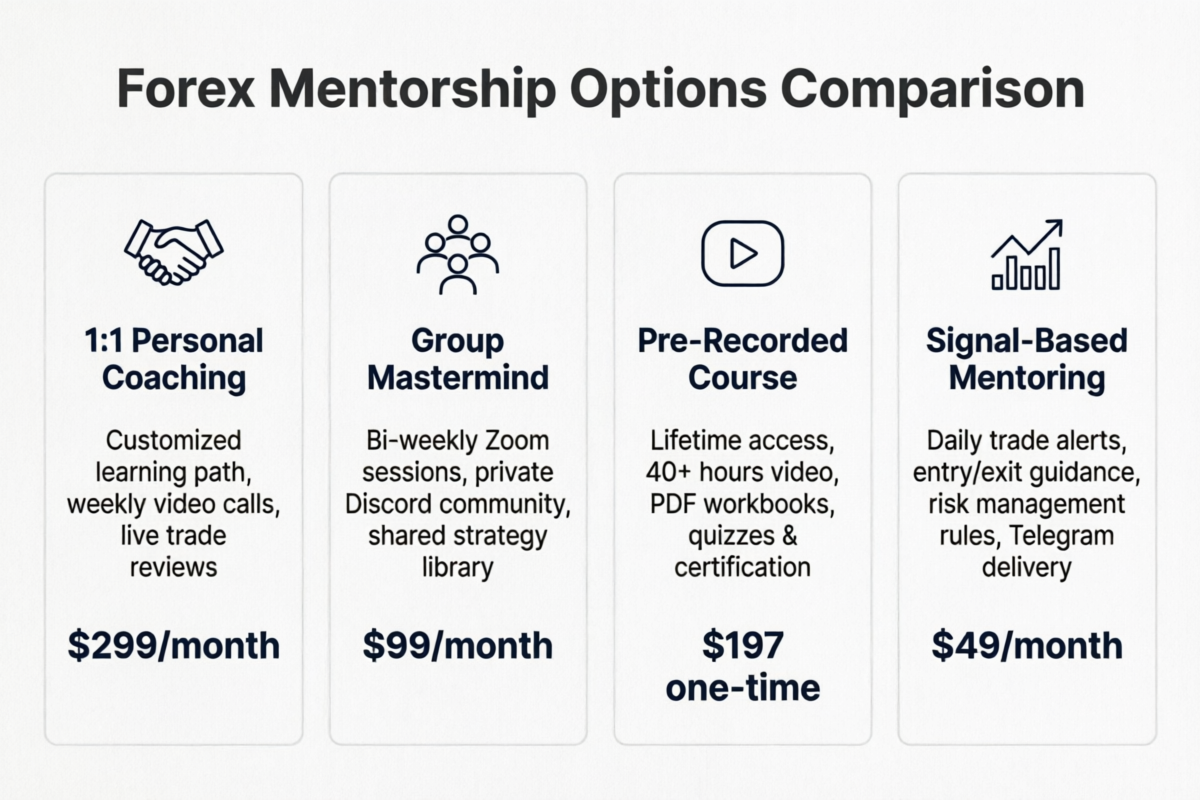
1. One-on-One Private Mentorship
What it is: Direct, personalized guidance from an experienced trader. You work exclusively with one mentor who tailors everything to your specific needs, trading style, and goals.
Typical structure:
- Weekly 60-90 minute video calls
- Direct WhatsApp/Telegram access to your mentor
- Personalized trading plan development
- Weekly trade journal reviews
- Live trading session observation and feedback
Cost: KES 50,000 - 200,000 for 3-6 month programs
Best for: Serious traders who want accelerated results and can invest in personalized guidance. If you've been trading for 3+ months and are ready to commit to professional-level development, this is your best option.
✅ My Experience with 1-on-1 Mentorship
When I started mentoring privately in 2015, I was skeptical myself. I'd spent 3 years learning mostly on my own. But within 3 months of working with a forex mentor, I identified mistakes I'd been making for years — mistakes that had cost me hundreds of thousands of shillings. The personalized feedback was worth 10x the investment.
2. Group Mentorship Programs
What it is: Small group settings (typically 5-15 students) where you learn alongside peers with regular mentor interaction.
Typical structure:
- Weekly group coaching calls (2-3 hours)
- Peer learning and accountability
- Shared trade reviews and discussions
- Community support via private group
- Limited 1-on-1 time with mentor
Cost: KES 15,000 - 50,000 for 3-6 month programs
Best for: Forex traders who benefit from peer learning and community support. If you're motivated by seeing others' progress and want to build a network of fellow traders, group programs offer excellent value.

3. Online Course + Mentorship Hybrid
What it is: Structured video curriculum combined with live mentorship sessions. You get the flexibility of self-paced learning with the accountability of live guidance.
Typical structure:
- Pre-recorded video lessons (40-80 hours)
- Weekly live Q&A sessions with mentor
- Private community access
- Assignment reviews and feedback
- Optional 1-on-1 sessions (extra cost)
Cost: KES 19,500 - 58,000 for comprehensive programs
Best for: Beginners who need structured education but also want mentor support. This is often the most cost-effective way to get both education and guidance.
4. Prop Firm Mentorship
What it is: Specialized mentorship focused on passing proprietary trading firm evaluations and managing funded accounts.
Typical structure:
- Prop firm-specific strategy development
- Risk management tailored to prop rules
- Psychological preparation for evaluations
- Post-funding account management guidance
- Scaling strategies for funded accounts
Cost: KES 80,000 - 150,000 for specialized programs
Best for: Traders who want to transition to funded trading. If your goal is to manage other people's capital and earn profit splits, prop firm mentorship gives you the specific skills needed.
5. Free Community Mentorship
What it is: Informal guidance from experienced traders in free communities (Telegram groups, Discord servers, forums).
Typical structure:
- Open community discussions
- Occasional live streams or webinars
- Peer-to-peer learning
- Limited direct mentor access
- No personalized guidance
Cost: Free (but time-intensive)
Best for: Traders on a tight budget who are self-motivated. Warning: Free communities are often filled with misinformation and scams. You'll need to filter signal from noise yourself.
⚠️ The Truth About "Free" Mentorship
In my 10+ years in this industry, I've never seen a truly successful forex trader give away high-quality mentorship for free. If someone is offering "free mentorship," they're usually using you as a lead magnet for something else—signals, account management, or affiliate commissions. Real mentorship requires real time and expertise, and that has value.
What to Look for in a Forex Mentor: The 7 Non-Negotiable Criteria
After evaluating hundreds of mentors and forex mentorship programs, I've identified seven criteria that separate legitimate mentors from the charlatans. If a potential mentor doesn't meet all seven, walk away.

1. Verifiable Track Record
What to look for: Third-party verified trading history on platforms like Myfxbook, FX Blue, or prop firm statements. The track record should show at least 12-24 months of consistent performance.
Red flags:
- Only screenshots (easily faked)
- No third-party verification
- Track record shorter than 6 months
- Unrealistic returns (50%+ monthly consistently)
"A mentor who can't show verified results is like a doctor who can't show their medical degree. You wouldn't trust either with your health or your money."— Industry Best Practice, 2025
2. Active Trading Experience
What to look for: The mentor should still be actively trading. Markets evolve constantly, and someone who stopped trading 5 years ago is teaching outdated strategies.
Questions to ask:
- What do you trade currently?
- Can you show me your recent trades?
- How do you adapt to changing market conditions?
3. Teaching Ability (Not Just Trading Ability)
What to look for: Great traders aren't always great teachers. Your chosen forex mentor should be able to explain complex concepts simply, adapt to your learning style, and provide constructive feedback.
How to evaluate:
- Watch their free content (YouTube, webinars)
- Ask for a trial session or consultation call
- Read reviews from previous students
- Check if they explain the "why" behind trades, not just the "what"
4. Risk Management Focus
What to look for: A legitimate forex mentor will spend at least 30% of their time teaching risk management. If they're only talking about entries and exits, run away.
Key topics they should cover:
- Position sizing and lot calculations
- Stop-loss placement strategies
- Daily/weekly loss limits
- Drawdown management
- Psychological discipline
💡 Research Insight
A 2025 study published in the Journal of Trading Education found that mentors who emphasize risk management produce students who are 67% less likely to blow their accounts in the first year. Risk management isn't optional—it's the foundation of sustainable trading.
5. Transparency About Limitations
What to look for: Honest mentors admit what they don't know. They'll tell you their win rate, their average drawdown, and their struggles. They won't promise guaranteed profits.
Green flags:
- "I lose on 40% of my trades"
- "Trading is hard, and you will have losing streaks"
- "I can't guarantee profits, but I can teach you a process"
- "Here are my worst months and what I learned from them"
6. Structured Curriculum
What to look for: A clear learning path with defined milestones. Random advice scattered across WhatsApp messages isn't mentorship—it's chaos.
Questions to ask:
- What's the program structure?
- What will I learn in each phase?
- How do you measure progress?
- What happens if I fall behind?
7. Post-Mentorship Support
What to look for: Mentorship shouldn't end abruptly. Look for forex mentorship programs that include follow-up support, alumni communities, or ongoing access to the mentor.
What to expect:
- 30-90 days of post-program support
- Access to alumni community
- Optional follow-up sessions
- Lifetime access to recorded materials
Red Flags: How to Spot a Forex Mentor Scam
The forex industry is unfortunately full of predators targeting beginners. Here are the red flags that should make you run in the opposite direction:
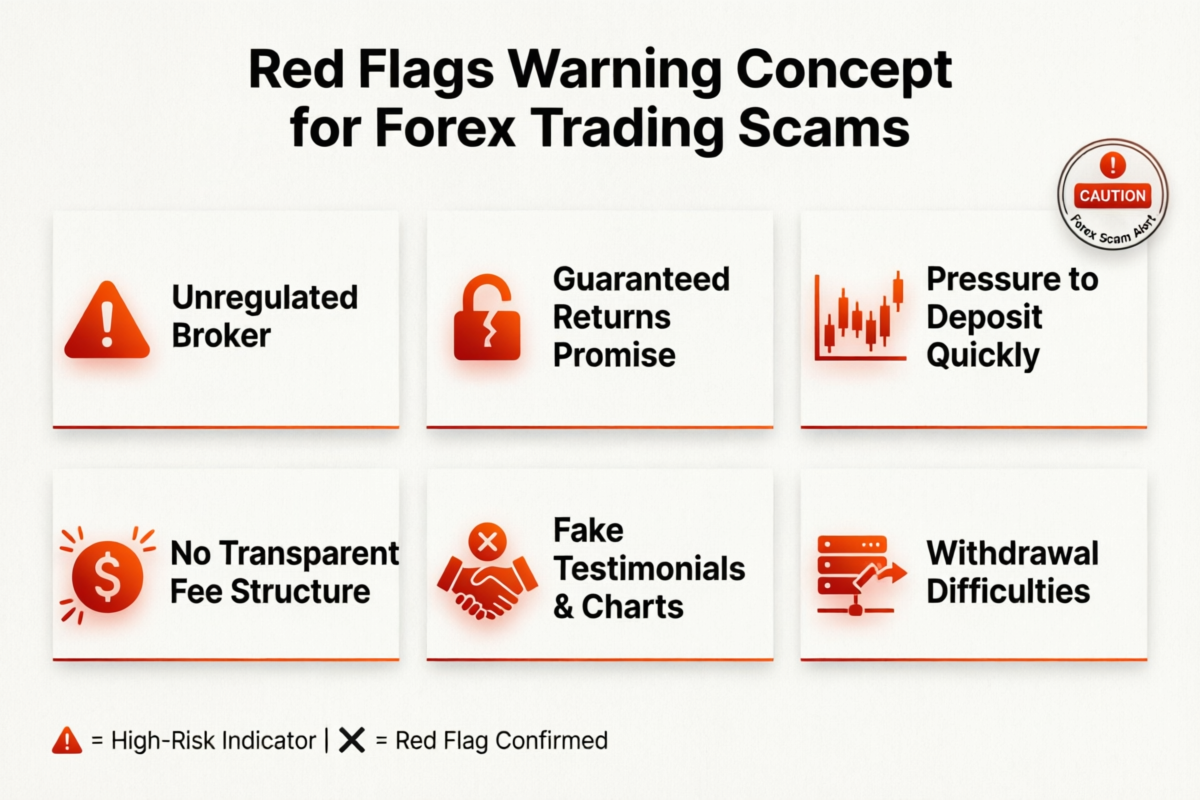
🚩 Red Flag #1: Guaranteed Returns
The scam: "Guaranteed 30% monthly returns" or "Never lose with my strategy."
The reality: No legitimate trader can guarantee returns. The forex market is inherently unpredictable. Anyone promising guaranteed profits is either lying or deluded.
What to do: Block them immediately. Report them to relevant authorities if possible.
🚩 Red Flag #2: Pressure Tactics
The scam: "Only 2 spots left!" or "This offer expires in 24 hours!"
The reality: Legitimate mentors don't need to pressure you. They're confident in their value and let you make informed decisions.
What to do: Take your time. If they're legitimate, the offer will still be there tomorrow. If they disappear, you dodged a bullet.
🚩 Red Flag #3: No Verifiable Track Record
The scam: "Trust me, I've been trading for 10 years" with no proof.
The reality: Anyone can claim experience. Without third-party verification, it's just words.
What to do: Ask for Myfxbook, FX Blue, or prop firm verification. If they can't provide it, move on.
🚩 Red Flag #4: Selling Signals Instead of Education
The scam: "Pay me $500/month and I'll send you winning trades."
The reality: This creates dependency, not skill. When the signals stop (or the mentor disappears), you're back to square one.
What to do: Look for mentors who teach you to fish, not give you fish.
🚩 Red Flag #5: Requesting Account Access
The scam: "Give me your login details and I'll trade for you."
The reality: This is almost always a scam. They'll drain your account or use it for wash trading.
What to do: Never share login credentials with anyone. Legitimate mentors never ask for this.
🚩 Red Flag #6: Unrealistic Performance Claims
The scam: "I made $50,000 last week" or "My students average 100% monthly returns."
The reality: Professional traders are happy with 5-15% monthly returns. Anyone claiming more is either lying or taking insane risks.
What to do: Research realistic return expectations. If it sounds too good to be true, it is.
🚩 Red Flag #7: No Refund Policy
The scam: "All sales final. No refunds."
The reality: Legitimate mentors stand behind their programs and offer satisfaction guarantees.
What to do: Only work with mentors who offer at least a 7-14 day refund policy.
⚠️ The Hard Truth
In 2025, the Capital Markets Authority (CMA) of Kenya received over 340 complaints about forex mentorship scams, with total losses exceeding KES 280 million. The average victim lost KES 820,000. Don't become a statistic.
Where to Find Legitimate Forex Mentors
Now that you know what to look for (and what to avoid), let's talk about where to actually find quality mentors.

1. Regulated Forex Academies
Why this works: An established forex academy has reputation to protect. They vet their forex trading mentors, provide structured forex training programs, and offer consumer protection.
Examples in Kenya:
- Kenya Forex Firm (established 2014, 5,000+ students)
- Nairobi Forex Academy
- Forex Trading Institute Kenya
- Kenya School of Forex
How to verify:
- Check how long they've been operating
- Look for student testimonials and reviews
- Verify their physical location
- Ask about mentor qualifications
2. Prop Firm Communities
Why this works: Prop firms attract serious forex traders who are already profitable. Many offer mentorship programs or can connect you with experienced traders.
Examples:
- FTMO community
- MyForexFunds network
- The5ers alumni
How to find forex mentors on Prop Firm Communities:
- Join prop firm Discord/Telegram groups
- Participate actively and build relationships
- Look for traders who share detailed trade journals
- Ask for recommendations from community managers
3. Forex Mentors on Public Trading Journals
Why this works: Traders who document their journey publicly are transparent and accountable. You can see their actual performance over time.
Platforms to check:
- Myfxbook public profiles
- FX Blue verified accounts
- TradingView published ideas
- Reddit trading journals (r/Forex, r/Daytrading)
How to approach:
- Follow their content for 2-3 months first
- Engage thoughtfully in their community
- Reach out privately expressing genuine interest
- Ask if they offer forex mentorship or know someone who does
4. Finding Mentors on Professional Trading Networks
Why this works: Professional networks attract serious traders who view trading as a business, not a hobby.
Examples:
- LinkedIn trading groups
- Local trader meetups (Nairobi, Mombasa, Kisumu)
- Trading conferences and workshops
- Alumni networks from reputable programs
How to network:
- Attend local trading events
- Join professional trading associations
- Participate in online forums authentically
- Offer value before asking for mentorship
5. Finding Mentors on Social Media (With Extreme Caution)

Why this works: Some legitimate forex mentors use social media to share valuable content and attract students.
Platforms:
- YouTube (look for detailed educational content)
- Instagram (verify track record independently)
- Twitter/X (engage with their trading analysis)
- TikTok (be extra skeptical—lots of scams here)
⚠️ Social Media Warning
90% of forex "mentors" on social media are scams. They use lifestyle marketing (cars, watches, vacations) to attract victims. Always verify independently before committing. Never pay based solely on social media presence.
Questions to Ask Potential Mentors
Before committing to any mentorship program, you need to have a thorough conversation with the potential mentor. Here are the essential questions to ask:

About Their Forex Trading Experience
- How long have you been trading forex? (Look for 3+ years minimum)
- Are you still actively trading? (They should be)
- Can you show me your verified track record? (Myfxbook, FX Blue, or prop firm statements)
- What's your average monthly return? (Realistic answer: 5-15%)
- What's your worst drawdown and how did you handle it? (Tests honesty and resilience)
About Their Teaching
- How many students have you mentored? (Look for 20+ minimum)
- What's your student success rate? (Realistic answer: 60-80% achieve profitability within 12 months)
- Can I speak with some of your former students? (Legitimate mentors will say yes)
- What's your teaching philosophy? (Should focus on process, not just profits)
- How do you adapt to different learning styles? (Tests teaching ability)
About the Mentorship Program
- What's the program structure and duration? (Should be clearly defined)
- How often will we meet? (Weekly minimum for effective mentorship)
- What happens between sessions? (Should include assignments and practice)
- How do I contact you between sessions? (Direct access is important)
- What if I need to miss a session? (Should have makeup policy)
About Mentorhsip Costs and Policies
- What's the total cost? (Should be transparent, no hidden fees)
- Do you offer payment plans? (Legitimate programs usually do)
- What's your refund policy? (Should offer at least 7-14 days)
- What's included in the program? (Get everything in writing)
- Is there ongoing support after the program ends? (Should include some follow-up)
💡 Pro Tip: Record the Conversation
With the mentor's permission, record your consultation call. This allows you to review their answers later, share with a trusted friend for a second opinion, and ensure you didn't miss any important details.
How to Evaluate and Compare Forex Mentors
Once you've had initial conversations with 2-3 potential mentors, you need a systematic way to compare them. Here's the evaluation framework I recommend:
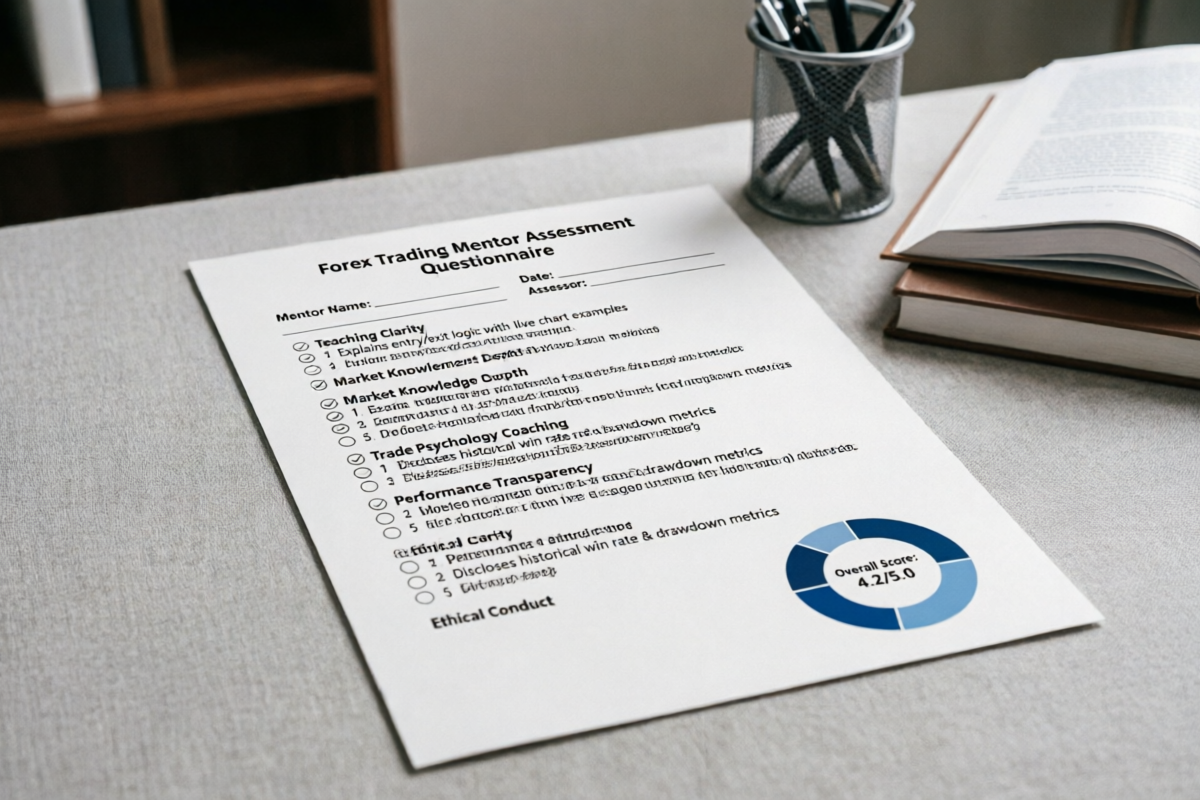
The Mentor Evaluation Scorecard
Rate each mentor on a scale of 1-10 for each criterion:
| Criterion | Weight | Mentor A | Mentor B | Mentor C |
|---|---|---|---|---|
| Verified Track Record | 20% | /10 | /10 | /10 |
| Teaching Ability | 20% | /10 | /10 | /10 |
| Program Structure | 15% | /10 | /10 | /10 |
| Student Success Rate | 15% | /10 | /10 | /10 |
| Cost vs. Value | 10% | /10 | /10 | /10 |
| Accessibility/Communication | 10% | /10 | /10 | /10 |
| Post-Program Support | 5% | /10 | /10 | /10 |
| Personal Compatibility | 5% | /10 | /10 | /10 |
| Weighted Total | 100% | /10 | /10 | /10 |
How to Calculate the Weighted Score
For each mentor:
- Multiply each score by its weight (e.g., Track Record score × 0.20)
- Add up all the weighted scores
- The mentor with the highest total score is your best choice
Example calculation for Mentor A:
- Track Record: 9 × 0.20 = 1.8
- Teaching: 8 × 0.20 = 1.6
- Structure: 9 × 0.15 = 1.35
- Success Rate: 8 × 0.15 = 1.2
- Cost/Value: 7 × 0.10 = 0.7
- Accessibility: 9 × 0.10 = 0.9
- Support: 8 × 0.05 = 0.4
- Compatibility: 9 × 0.05 = 0.45
- Total: 8.4/10
✅ Decision Framework
Score 8.0-10: Excellent choice. Move forward with confidence.
Score 6.5-7.9: Good choice, but consider if there are deal-breakers.
Score below 6.5: Keep looking. This mentor isn't the right fit.
Understanding Forex Mentorship Costs and ROI
Let's talk money. Mentorship is an investment, and like any investment, you need to understand the costs and potential returns.
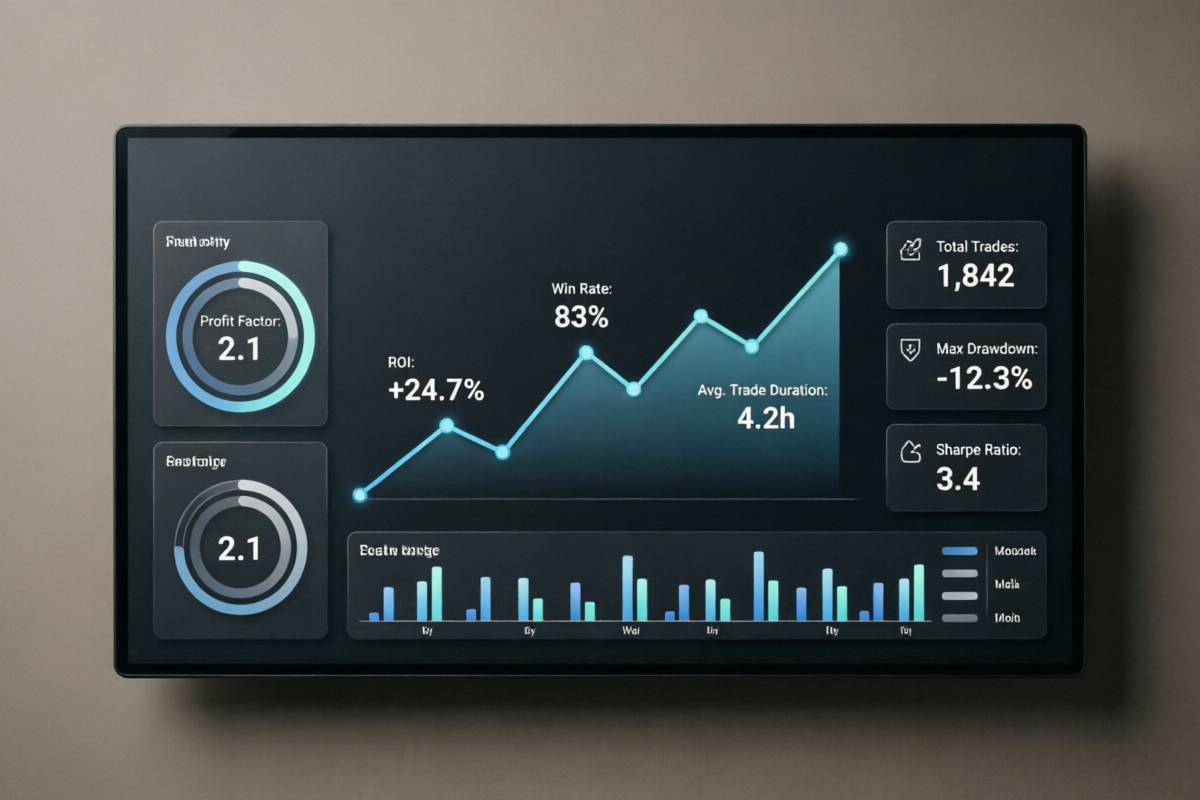
Typical Mentorship Costs in 2026
| Mentorship Type | Duration | Cost Range (KES) | Cost per Month |
|---|---|---|---|
| Free Community | Ongoing | 0 | 0 |
| Group Program | 3-6 months | 15,000 - 50,000 | 5,000 - 16,700 |
| Online Course + Mentorship | 6-10 weeks | 19,500 - 58,000 | 7,800 - 23,200 |
| 1-on-1 Private Mentorship | 3-6 months | 50,000 - 200,000 | 16,700 - 66,700 |
| Prop Firm Mentorship | 2-4 months | 80,000 - 150,000 | 20,000 - 75,000 |
Calculating Your ROI
Let's look at a realistic scenario. Say you invest KES 120,000 in a 12-week private mentorship program.
Without mentorship (self-taught path):
- Average time to profitability: 24-36 months
- Account blowups during learning: 2-3 (average loss KES 150,000 each)
- Total cost: KES 300,000 - 450,000 in losses + 2-3 years of time
With mentorship:
- Average time to profitability: 6-12 months
- Account blowups: 0-1 (mentor helps you avoid major mistakes)
- Total cost: KES 120,000 + 6-12 months of time
Net savings with mentorship: KES 180,000 - 330,000 + 12-24 months of time
"The question isn't whether you can afford mentorship. The question is whether you can afford NOT to have it. Every month you struggle alone costs you money in blown accounts and missed opportunities."— Brian Otieno, Head of Desk, Kenya Forex Firm
Payment Options to Consider
Most legitimate mentorship programs offer flexible payment options:
- Upfront payment: Usually includes a 5-10% discount
- Monthly installments: Spread cost over 3-10 months
- M-PESA plans: Common in Kenya for accessibility
- Scholarship/discount programs: Some mentors offer reduced rates for committed students
💡 Financial Planning Tip
Never invest money you can't afford to lose in mentorship. If paying KES 120,000 would create financial stress, start with a group program (KES 15,000-50,000) or online course with mentorship (KES 19,500-58,000). You can always upgrade to 1-on-1 later.
Success Stories: Real Traders, Real Results
Don't just take my word for it. Here are three real stories from traders who found the right mentor and transformed their trading:
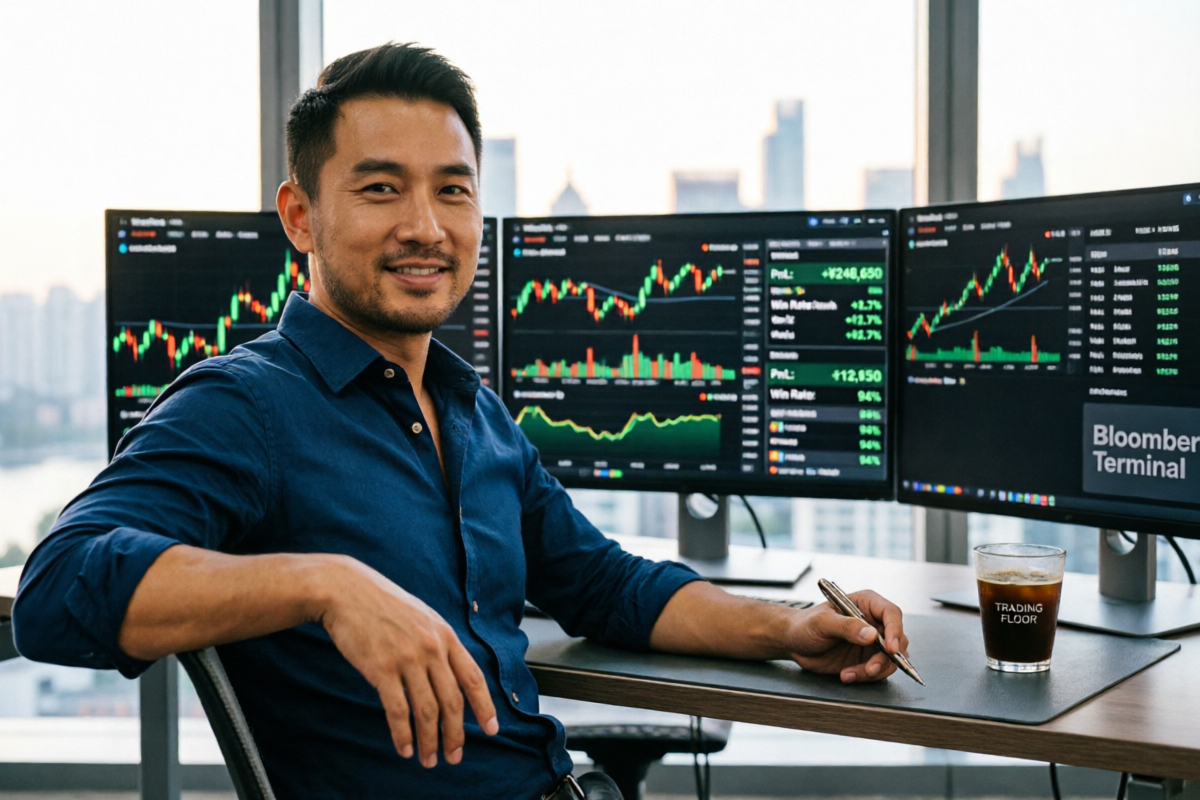
Case Study #1: Dennis M. - From Blowing Accounts to Funded Trader
Starting point: Dennis had been trading for 2 years, blowing an account every 3-4 months. Total losses: KES 450,000.
The problem: "I knew the basics, but I kept making the same mistakes. I'd overleverage, move my stop losses, revenge trade after losses. I needed someone to hold me accountable."
The mentorship: Dennis enrolled in a 12-week private mentorship program (KES 120,000). His mentor identified three critical issues:
- Risk management was non-existent (risking 10-15% per trade)
- No trading plan or journal
- Emotional decision-making during trades
The transformation:
- Week 1-4: Established proper risk management (1-2% per trade)
- Week 5-8: Developed trading plan and started journaling
- Week 9-12: Mastered emotional discipline and execution
The results:
- Month 4: First profitable month (+8%)
- Month 6: Passed $50,000 prop firm challenge
- Month 12: Managing $100,000 in funded capital
- Annual income from trading: KES 2.4 million
"The mentorship paid for itself in the first month after I got funded. But more importantly, I learned skills that will serve me for life. I went from a gambler to a professional trader."— Dennis M., Funded Trader, Nairobi
Case Study #2: Grace A. - From Part-Time to Full-Time Trader
Starting point: Grace was working a 9-5 job and trading part-time. She was consistently profitable but wanted to go full-time.
The problem: "I was making money, but I didn't have a scalable process. I was trading intuitively, not systematically. I needed structure to grow."
The mentorship: Grace joined a 6-month group mentorship program (KES 45,000) focused on systematic trading and scaling.
The transformation:
- Month 1-2: Documented and systematized her existing strategy
- Month 3-4: Learned to scale position sizing safely
- Month 5-6: Developed multiple income streams (trading + teaching)
The results:
- Month 7: Quit her 9-5 job
- Month 12: Trading income exceeded previous salary by 3x
- Month 18: Launched her own mentorship program
- Current: Full-time trader earning KES 500,000+ monthly
"Group mentorship was perfect for me. I learned from the mentor, but also from seeing how other traders approached similar challenges. The community aspect was invaluable."— Grace A., Full-Time Trader, Mombasa
Case Study #3: Peter K. - From Self-Taught Struggles to Consistent Profits
Starting point: Peter had tried learning forex on his own for 3 years using YouTube and free resources. He was barely breaking even.
The problem: "I had so much information, but no structure. I was jumping between strategies, never mastering any. I needed someone to help me focus."
The mentorship: Peter enrolled in an online course with mentorship (KES 58,000) that provided structured learning plus weekly group coaching.
The transformation:
- Week 1-4: Focused on mastering one strategy (price action)
- Week 5-8: Backtested 200+ trades to build confidence
- Week 9-12: Started live trading with proper risk management
The results:
- Month 4: First consistently profitable month
- Month 8: Passed first prop firm challenge ($10,000)
- Month 12: Scaling to $50,000 funded account
- Current: Consistent 8-12% monthly returns
"The structure was everything. Having a clear curriculum and weekly accountability kept me focused. I stopped jumping between strategies and finally mastered one approach."— Peter K., Funded Trader, Kisumu
✅ Common Themes in These Success Stories
- All three invested in mentorship rather than trying to learn alone
- All three saw results within 3-6 months (not years)
- All three emphasized structure and accountability as key factors
- All three are now consistently profitable and growing their trading
Making the Commitment: Your Next Steps
You've learned what to look for, where to find mentors, how to evaluate them, and what to expect. Now it's time to take action.

Step 1: Clarify Your Goals (Week 1)
Before you start searching, get clear on what you want:
- What's your trading experience level? (Beginner, intermediate, advanced)
- What's your primary goal? (Consistency, profitability, funded trading, full-time income)
- What's your budget? (Be realistic about what you can invest)
- What's your timeline? (When do you want to achieve your goals?)
- What's your learning style? (1-on-1, group, online, in-person)
Write these down. They'll guide your search and help you evaluate mentors.
Step 2: Research Potential Mentors (Weeks 2-3)
Using the sources we discussed earlier, create a list of 5-10 potential mentors. For each one:
- Review their background and credentials
- Check their verified track record
- Read reviews from previous students
- Watch their free content to assess teaching style
- Note their program structure and pricing
Narrow your list to 2-3 finalists.
Step 3: Have Consultation Calls (Week 4)
Reach out to your finalists and schedule consultation calls. Use the questions we covered earlier to evaluate each mentor. Take detailed notes.
After the calls, use the evaluation scorecard to compare them objectively.
Step 4: Make Your Decision (Week 5)
Choose the mentor who scored highest on your evaluation. Don't overthink it—no mentor is perfect, but the right one will be significantly better than no mentor at all.

Step 5: Commit Fully (Months 2-6+)
Once you've enrolled, here's how to maximize your mentorship:
- Show up prepared: Complete assignments, review materials, bring specific questions
- Be coachable: Accept feedback gracefully, even when it's hard to hear
- Take action: Implement what you learn immediately
- Track your progress: Journal every trade, review weekly with your mentor
- Stay committed: Don't quit when it gets difficult (it will)
✅ The 90-Day Rule
Commit to your mentorship for at least 90 days before evaluating results. Most traders need 60-90 days to internalize new habits and see consistent improvement. Quitting early is the #1 reason mentorship fails.
Conclusion: Your Mentor is Waiting
Here's the truth: You don't have to figure this out alone. The traders who succeed in forex aren't necessarily the smartest or the most talented—they're the ones who invest in proper guidance and commit to the process.

I've seen it hundreds of times at Kenya Forex Firm. Traders come to us frustrated, confused, and ready to give up. They've tried everything—YouTube videos, free Telegram groups, expensive indicators, "secret strategies." Nothing works.
Then they commit to mentorship. Within 3-6 months, they're consistently profitable. Within 12 months, they're passing prop firm challenges and managing funded accounts. Within 18-24 months, they're trading full-time and earning more than their previous salary.
The difference? They stopped trying to learn alone and invested in proper guidance.
Your Action Plan
If you're serious about finding a forex trading mentor, here's what to do next:
- This week: Clarify your goals using the framework in Step 1
- Next 2 weeks: Research potential mentors using the sources in this guide
- Week 4: Schedule consultation calls with your top 2-3 choices
- Week 5: Make your decision using the evaluation scorecard
- Week 6+: Commit fully to your mentorship journey

💡 A Final Word of Advice
Don't wait until you're "ready." You'll never feel 100% ready. The best time to find a mentor is now. Every month you delay costs you money in blown accounts and missed opportunities.
If you're in Kenya and want to explore mentorship options, Kenya Forex Firm offers private mentorship programs starting at KES 120,000 for 12 weeks. You can book a free consultation call to see if we're the right fit for you.
Call us: +254 710 251 380
Email: help@kenyaforexfirm.com
WhatsApp: +254 710 251 380
The right mentor is out there. They're waiting to help you transform your trading. Your job is to find them, evaluate them carefully, and commit fully to the process.
Do that, and you'll join the 73% of mentored traders who achieve consistent profitability. Don't do it, and you'll likely join the 87% of self-taught traders who fail.
The choice is yours. Choose wisely.
Frequently Asked Questions
How much does a forex trading mentor cost?
In 2026, forex mentorship costs vary widely: free community mentorship, $150-$600/month (KES 19,500-78,000) for group programs, $1,500-$6,000 (KES 195,000-780,000) for genuine one-to-one mentorship, and $3,000-$8,000 (KES 390,000-1,040,000) for intensive multi-month programs. Be wary of anything below $150/month or above $10,000 without proven results.
Where can I find a legitimate forex trading mentor?
Legitimate forex mentors are found in prop firm communities, public trading journals (Myfxbook, FX Blue), regulated academies, and professional trading networks. Avoid mentors found only through social media ads or those who can't verify their track record with third-party platforms.
What red flags should I watch for when choosing a forex mentor?
Major red flags include: guaranteed returns, pressure tactics, lack of verifiable track record, selling signals instead of teaching, requesting account access, unrealistic performance claims (50%+ monthly), and no refund policy. Legitimate mentors focus on education, transparency, and realistic expectations.
How long does forex mentorship typically last?
Most effective forex mentorship programs last 3-12 months. Initial intensive phases run 60-90 days, followed by ongoing support. Research shows traders who commit to at least 6 months of mentorship achieve 4.2x better results than those who quit early.
Is online forex mentorship as effective as in-person?
Yes, online forex mentorship can be equally effective when it includes live trading sessions, personalized feedback, and direct access to the mentor. Studies show online mentored traders achieve 85% of the success rates of in-person students when programs include live interaction and community support.
What's the difference between a course and mentorship?
A course provides information; mentorship provides transformation. Courses teach you concepts; mentors help you apply them to your specific situation. Courses are one-way communication; mentorship is personalized, interactive guidance. Most successful traders combine both—education first, then mentorship to accelerate results.
Can I switch mentors if the first one isn't working out?
Yes, but give it at least 90 days first. Most mentorship relationships need time to develop. If after 90 days you're not seeing progress and have communicated your concerns, it's okay to switch. Just make sure you've given the mentor fair opportunity to help you succeed.
What if I can't afford expensive mentorship?
Start with group programs (KES 15,000-50,000) or online courses with mentorship (KES 19,500-58,000). These offer excellent value and still provide structured guidance. You can always upgrade to 1-on-1 mentorship once you start generating profits. The key is to start somewhere—don't let perfect be the enemy of good.