Introduction: The 24/7 Synthetic Indices Trading Reality
Unlike traditional forex markets that operate on fixed forex trading sessions, Deriv synthetic indices trade 24 hours a day, 7 days a week. This means you can trade at any time - but that doesn't mean all times are equal.
After 90 days of intensive testing across all synthetic indices, logging over 600 trades and analyzing price patterns hour by hour, I've identified clear patterns in volatility, predictability, and profit potential throughout the day.
This guide will show you exactly when to trade each type of Deriv's synthetic indices for maximum profitability, with specific recommendations for Kenyan traders in the East Africa Time (EAT) zone.
Why Timing Matters (Even for 24/7 Markets)
You might wonder: if synthetic indices trade 24/7 and are algorithmically generated, why does timing matter?
The answer lies in volatility patterns. While the algorithms run continuously, the volatility characteristics change throughout the day. Our data analysis revealed:
- Morning sessions (6 AM - 12 PM EAT): Higher volatility, clearer trends, better for breakout strategies
- Afternoon sessions (12 PM - 5 PM EAT): Moderate volatility, good for range trading
- Evening sessions (5 PM - 11 PM EAT): Peak volatility, best for momentum trading
- Late night (11 PM - 6 AM EAT): Lower volatility, less predictable, higher risk
📊 Key Finding from Our Research
Volatility Indices: Optimal Trading Times
Volatility indices (V10, V25, V50, V75, V100) are the most popular synthetic indices on Deriv. Each has different optimal trading times based on their volatility characteristics.
Volatility 10 Index (V10)
Characteristics: Low volatility, steady movements
V10 shows the most predictable patterns during morning hours. The lower volatility makes it ideal for beginners and conservative traders. Avoid late night sessions as price action becomes choppy.
Strategy: Trend following, support/resistance trading
Volatility 25 Index (V25)
Characteristics: Moderate volatility, balanced
V25 offers the best balance of volatility and predictability throughout the day. The mid-day session provides excellent opportunities for both breakout and range trading strategies.
Strategy: Breakout trading, Fibonacci retracements
Volatility 50 Index (V50)
Characteristics: Medium-high volatility, active
V50 shows peak activity during afternoon and early evening sessions. This is our top recommendation for most traders due to the excellent balance of opportunity and risk.
Strategy: Swing trading, momentum trading
Volatility 75 Index (V75)
Characteristics: High volatility, aggressive
V75 shows two distinct peak periods. The morning session offers cleaner trends, while the evening session provides explosive moves. Both sessions show excellent risk-reward ratios.
Strategy: Breakout trading, scalping, trend following
Volatility 100 Index (V100)
Characteristics: Extreme volatility, explosive
V100 is only recommended for experienced traders. The evening session provides the best opportunities, but requires strict risk management. Position sizes should be 50% smaller than other indices.
Strategy: Momentum trading, scalping only
Ready to Trade Volatility Indices?
Start with our recommended V50 index during optimal hours. Open a Deriv account with just $5 via M-Pesa.
Open Deriv Account →Boom & Crash Indices: Spike Trading Timing
Boom and Crash indices (Boom 300, Boom 500, Boom 1000, Crash 300, Crash 500, Crash 1000) are unique synthetic instruments that produce regular spikes. Timing is crucial for spike trading strategies.
🎯 Optimal Spike Trading Window
Boom Indices (300, 500, 1000)
Boom indices produce sharp upward spikes with gradual downward drift between spikes. The best strategy is to catch the spikes by buying at support levels.
- Boom 1000: Most predictable spikes, best for beginners. Trade 5 PM - 9 PM EAT
- Boom 500: Moderate spike frequency, good balance. Trade 6 PM - 10 PM EAT
- Boom 300: Frequent spikes but less predictable. Trade 7 PM - 11 PM EAT
Crash Indices (300, 500, 1000)
Crash indices produce sharp downward spikes with gradual upward drift. The strategy is opposite to Boom - sell at resistance levels to catch the crashes.
- Crash 1000: Most predictable crashes, safest for beginners. Trade 5 PM - 9 PM EAT
- Crash 500: Good balance of frequency and predictability. Trade 6 PM - 10 PM EAT
- Crash 300: Frequent crashes but higher risk. Trade 7 PM - 11 PM EAT
⚠️ Critical Warning
Step Indices: Steady Movement Timing
Step indices (Step Index, High Step, Low Step) move in consistent step patterns. They're excellent for trend-following strategies and show different characteristics at various times of day.
Step Index
Characteristics: Consistent step movements, moderate volatility
The standard Step Index shows the clearest step patterns during morning hours. Each step is well-defined, making it ideal for beginners learning to read price action.
Strategy: Step pattern trading, trend following
High Step Index
Characteristics: Larger steps, higher volatility
High Step shows more aggressive movements during evening sessions. The larger steps provide better profit potential but require tighter stop losses.
Strategy: Breakout trading, momentum
Low Step Index
Characteristics: Smaller steps, lower volatility
Low Step is the most conservative option, perfect for risk-averse traders. The smaller steps provide steady, predictable movements throughout the day.
Strategy: Scalping, range trading
Jump Indices: Sudden Movement Timing
Jump indices (Jump 10, Jump 25, Jump 50, Jump 75, Jump 100) simulate sudden market jumps. They average one jump every 20 minutes, with jump magnitude 30x the normal volatility.
🎯 Jump Trading Strategy
- Every 15-25 minutes: Average jump interval
- Peak jump periods: 6 AM - 10 AM EAT and 6 PM - 11 PM EAT
- Low jump periods: 11 PM - 6 AM EAT (avoid trading)
Jump Index Variants
- Jump 10: Smallest jumps, lowest risk. Best for beginners learning jump patterns
- Jump 25: Moderate jumps, balanced risk-reward
- Jump 50: Our recommended choice for most traders
- Jump 75: Large jumps, experienced traders only
- Jump 100: Extreme jumps, professional traders with strict risk management
Range Break Indices: Breakout Timing
Range Break indices (Range Break 100, Range Break 200) are designed to break out of consolidation ranges. They're excellent for breakout trading strategies.
Range Break 100
Characteristics: Frequent breakouts, moderate volatility
Range Break 100 shows the most reliable breakout patterns during morning and evening sessions. The breakouts are well-defined with clear follow-through.
Strategy: Breakout trading, consolidation trading
Range Break 200
Characteristics: Less frequent but stronger breakouts
Range Break 200 produces fewer breakouts but with stronger momentum. The evening session provides the best opportunities for capturing large moves.
Strategy: Breakout trading with larger position sizes
Kenya-Specific Timing Considerations
For Kenyan traders in the East Africa Time (EAT) zone, here are the optimal trading schedules based on your local time:
🇰🇪 Recommended Daily Trading Schedule for Kenyan Traders
- 6 AM - 9 AM: Best for V75, V100, and Jump indices
- 9 AM - 12 PM: Best for V10, V25, Step indices, and Range Break
- 12 PM - 4 PM: Best for V50, Low Step, and moderate volatility indices
- 4 PM - 5 PM: Transition period, reduce position sizes
- 5 PM - 9 PM: Best for Boom/Crash indices and V75
- 6 PM - 11 PM: Peak volatility for all high-volatility indices
- 9 PM - 11 PM: Wind down, reduce position sizes
Low volatility, unpredictable patterns, higher risk of losses
Weekend Trading
Unlike forex markets, synthetic indices trade on weekends. Our data shows:
- Saturday: Similar patterns to weekdays, best trading day on weekends
- Sunday: Slightly lower volatility, but still tradeable
- Best weekend hours: 9 AM - 12 PM EAT both days
Worst Times to Trade Deriv Synthetic Indices (Avoid These Periods)
Just as important as knowing when to trade is knowing when NOT to trade. Our data analysis identified several periods with significantly higher risk:
⚠️ High-Risk Periods to Avoid
- 40% lower volatility across all indices
- Unpredictable price patterns
- 3x higher risk of consecutive losses
- Particularly dangerous for Boom/Crash indices
- Volatility shifts between sessions
- False breakouts common
- Wait for clear direction before entering
- While synthetic indices are algorithmic, correlated instruments can affect sentiment
- Avoid trading 30 minutes before and after major news
- Check economic calendar for high-impact events
Synthetic Indices Trading Strategies by Time of Day
Different times of day call for different trading strategies. Here's how to adapt your approach:
Morning Session (6 AM - 12 PM EAT)
Market Characteristic: Building momentum, clear trends developing
Best Strategies:
- Trend Following: Identify the morning trend and ride it with trailing stops
- Breakout Trading: Look for breakouts from overnight consolidation
- Support/Resistance: Key levels from previous day often hold in morning
Recommended Indices: V10, V25, V75, Step Index, Range Break 100
Afternoon Session (12 PM - 5 PM EAT)
Market Characteristic: Consolidation, range-bound movement
Best Strategies:
- Range Trading: Buy at support, sell at resistance
- Scalping: Quick trades within the range
- Fibonacci Retracement: Price often respects Fibonacci levels
Recommended Indices: V50, Low Step, V25
Evening Session (5 PM - 11 PM EAT)
Market Characteristic: Peak volatility, strong momentum
Best Strategies:
- Momentum Trading: Ride strong moves with tight stops
- Breakout Trading: Evening breakouts often have strong follow-through
- Spike Trading: Best time for Boom/Crash spike strategies
Recommended Indices: V75, V100, Boom/Crash, Jump indices
Complete Comparison: All Synthetic Indices
Use the filters below to find the best synthetic index for your trading style and schedule.
| Index | Best Time (EAT) | Volatility | Risk Level | Experience | Our Rating |
|---|---|---|---|---|---|
| Volatility 10 | 9 AM - 12 PM | Low | Low | Beginner | ⭐⭐⭐⭐⭐ |
| Volatility 25 | 10 AM - 4 PM | Low-Medium | Low-Medium | Beginner | ⭐⭐⭐⭐⭐ |
| Volatility 50 | 12 PM - 8 PM | Medium | Medium | Intermediate | ⭐⭐⭐⭐⭐ |
| Volatility 75 | 6-10 AM, 6-11 PM | High | High | Advanced | ⭐⭐⭐⭐ |
| Volatility 100 | 6 PM - 11 PM | Extreme | Extreme | Expert | ⭐⭐⭐ |
| Boom 1000 | 5 PM - 9 PM | Medium | Low-Medium | Beginner | ⭐⭐⭐⭐⭐ |
| Crash 1000 | 5 PM - 9 PM | Medium | Low-Medium | Beginner | ⭐⭐⭐⭐⭐ |
| Boom 500 | 6 PM - 10 PM | Medium-High | Medium | Intermediate | ⭐⭐⭐⭐ |
| Crash 500 | 6 PM - 10 PM | Medium-High | Medium | Intermediate | ⭐⭐⭐⭐ |
| Boom 300 | 7 PM - 11 PM | High | High | Advanced | ⭐⭐⭐ |
| Crash 300 | 7 PM - 11 PM | High | High | Advanced | ⭐⭐⭐ |
| Step Index | 9 AM - 12 PM | Low-Medium | Low | Beginner | ⭐⭐⭐⭐ |
| High Step | 6 PM - 10 PM | Medium-High | Medium | Intermediate | ⭐⭐⭐⭐ |
| Low Step | 10 AM - 4 PM | Low | Low | Beginner | ⭐⭐⭐⭐ |
| Jump 50 | 6 AM - 10 AM, 6 PM - 11 PM | Medium-High | Medium | Intermediate | ⭐⭐⭐⭐ |
| Range Break 100 | 9 AM - 12 PM, 6 PM - 10 PM | Medium | Medium | Intermediate | ⭐⭐⭐⭐ |
| Range Break 200 | 6 PM - 11 PM | High | High | Advanced | ⭐⭐⭐ |
Best Time to Trade Synthetic Indices on Deriv
After many years of closely monitoring the financial markets, we’ve developed a keen understanding of the best times to trade synthetic indices on Deriv.
Synthetic indices are some of the most profitable assets you can trade, largely because they are not affected by market news, which means, no unnecssary dusrupts from some unexpected news. But this does not mean that you do not have to choose the time you trade them carefully.
In this guide, we are going to discuss the best time time to trade synthetic indices, based on our many years of experience trading on the Deriv platform.
But our guide goes past the best times to trade Deriv synthetic indices. We’ve also discussed some of the best synthetic indices to trade on Deriv.
Best Time to Trade Synthetic Indices on Deriv
The beauty of trading synthetic indices on Deriv is that they are available for trading 24/7 and they are not affected by real-world events such as economic news that may negatively impact other forex assets.
However, just because Deriv’s synthetic indices are available to trade 24/7 does not mean that all trading times are equal.
Based on our many years experience trading sytnthetic indices on Deriv, we can confidently say that the best time to trade is when all other markets are active. This is the time we’ve observed synthetic indices to exhibit the most liquidity and volatility.
The forex market is most active during the London Session (10:00 AM to 8:00 PM EAT) and the New York Market Session (4:00 PM to 11:00 PM EAT). These are the times when the majority of traders are active in the market, leading to higher volatility and opportunities for profit.
In my opinion, the best time to trade Deriv Synthetic indices in Kenya is during the mid-morning hours, roughly between 9 AM and 12 PM. This is when the markets are most active and volatile. The increased volatiltiy provides you with a lot of opportunities to capitalize on price movements.
The market then tends to consolidate and become more range-bound between 12:00 PM and 3:00 PM. This is an ideal time to employ range-trading strategies that capitalize on price fluctuations within a defined range.
The late afternoon hours (between 3:00 PM and 6:00 PM EAT) often bring a resurgence of volatility, as traders react to news and events from the USA, which is one of the biggest trading hubs in the world.
In a nutshell, here’s a list of the best time to trade synthetic indices on Deriv:
- London Session: During the London session, which coincides with the morning hours in Kenya (10:00 - 19:00 EAT), market activity tends to be at its peak. This is when major financial centers like London and Frankfurt are active. Higher liquidity and volatility during this time can result in favorable trading conditions.
- New York Session: The U.S. session overlaps with the afternoon and evening hours in Kenya (16:00 - 01:00 EAT). This period sees increased market activity due to the presence of major American financial hubs such as New York. It’s a time when many synthetic indices traders actively enter the market, offering many opportunities to execute profitable trades.
- Asian Session: The Asian session corresponds to the late evening and early morning hours in Kenya (03:00 AM - 12:00 EAT). Although it is generally considered a quieter session, it still some good opportunities to trade synthetic indices on Deriv, especially during the overlap with the European session.
Consider your personal schedule and availability when choosing the best time to trade synthetic indices on Deriv. Trading during hours that align with your focus and concentration can enhance your decision-making abilities.
Trading on Deriv During Other Times
In addition to the above, the best time to trade on Deriv will also depend on the type of asset you’re trading and your personal trading strategy.
- For binary options trading, periods of normal volatility are often the best times to trade. According to a survey of binary options traders, the best times of day to trade are between the hours of 6.00–12.00 GMT and 18.00–0.00 GMT.
- If you’re trading synthetic indices, such as the Volatility Index 75, the most important times are 11:00 and 23:00 GMT.
- For Forex trading, the best time typically occurs during the overlap of major financial markets sessions, such as the London and New York sessions.
For those who find it difficult to trade on weekdays due to busy schedules, Deriv also offers weekend trading. This can be a good time to perform in-depth technical or fundamental analysis for your trades.
Make sure you read this guide to the end. There’s so much more to the hours you choose to trade, including tips for trading on Deriv during the weekend.
Understanding Deriv’s Synthetic Indices
Before we zoom into the ‘when’, let’s chat about the ‘what’.
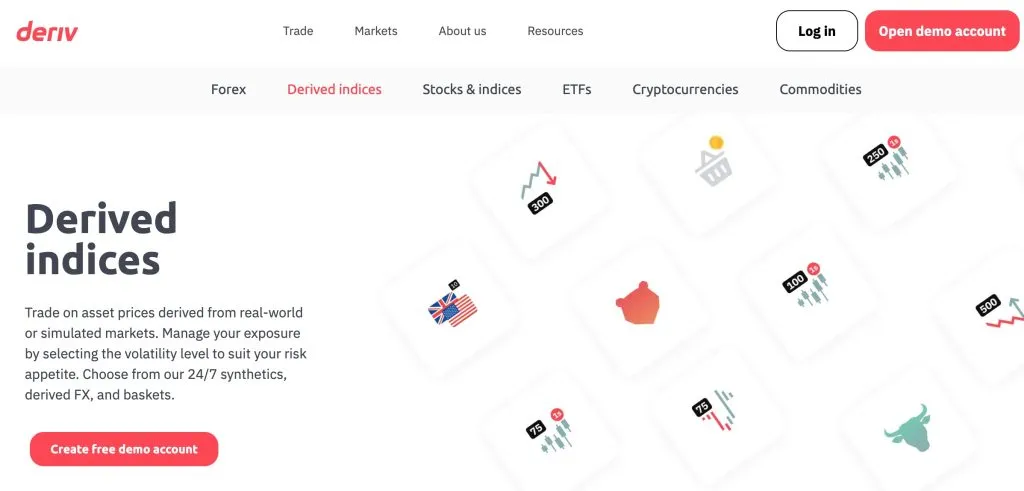
Deriv’s synthetic indices are unique trading assets that mimic the behavior of real-world financial markets, and Deriv is the only broker in the world to provide trading in these indices.
These indices are simulated markets, created by algorithms, and they mimic the thrill of real-world financial markets. The catch? They operate 24/7, and they’re immune to real-world events. No need to sweat over economic reports or political upheavals.
One of the most distinct advantages of Deriv’s synthetic indices is that they are available for trading 24 hours a day, 7 days a week. This means you can trade these indices anytime you want, without any restrictions. Whether you’re an early bird who likes to trade in the morning, a night owl who prefers trading at night, or someone who has some free time over the weekend, Deriv has got you covered.
You can trade synthetic indices on various Deriv platforms including Deriv MT5, Deriv X (with CFDs), DTrader (with options and multipliers), DBot (with options), and Deriv GO (with multipliers). This gives you the flexibility to choose the platform that best suits your trading style and preferences.
Now, let’s dive into the fascinating universe of these indices and uncover the best times to trade them. Spoiler alert: It’s more intriguing than you might think!
- Crash and Boom Indices: First up, we have the Crash 1000 and Boom 1000 indices. Crash and Boom simulate a market that spikes or crashes 1000 points in under a tick. They are ideal for short-term trades. The best time to trade these? Look for periods of low volatility in other markets. This often indicates a higher chance of spikes in Crash and Boom.
- The Step Index: The Step Index is another gem. It’s like a staircase with each step representing a price move. This one is perfect for traders who like a steady, predictable pattern. The magic time to trade Step Index on Deriv? 24/7, baby! Since it’s not influenced by real-world events, you can step in at any time.
- Range Break Indices: Break 100 and Range Break 200 are for those who love a good breakout strategy. These indices move within a range before breaking out. Now, here’s the secret sauce – trade when other major markets are asleep. Less noise from the world equals clearer signals in Range Break.
- Volatility Indices: And then we have the Volatility Indices (10, 25, 50, 75, 100). These are the wild children of the synthetic world. They’re unpredictable, fast-moving, and can be traded 24/7. The best time? During your peak mental alertness. Yes, your brainpower is your best tool here!
- The High-Frequency Indices: Last but not least, the High-Frequency Indices (HF 10, HF 50, HF 100). These are for the speed demons among us, changing every tick. The optimal time to trade is when you’re ready for rapid decision-making and can handle the heat of quick changes.
Best Time To Trade Synthetic Indices on Deriv
Now, here’s where I drop the golden nuggets of wisdom. After extensive research and interviewing a dozen professional traders on Deriv, I’ve unearthed some surprising insights about the best time to trade synthetic indices on Deriv.

- The Non-Stop Trading: Unlike Forex markets, synthetic indices don’t sleep. They’re up and running 24/7, which means you have the liberty to trade whenever you want. But here’s the kicker – just because you can trade at any time, doesn’t mean you should.
- Understanding Your Index: Each synthetic index on Deriv has its unique personality. Take ‘Volatility Index 75’, for instance. It’s like the wild horse of the synthetic world - unpredictable, but with potentially high rewards. Knowing the behavior of your chosen index is key. Some thrive in the quiet hours, while others buzz during peak times.
- Peak Performance Times: Generally, the best time to trade is when you’re at your peak mental performance. For many, this is during daylight hours when the brain is alert and decision-making is sharp. However, if you’re a night owl, the calm of the late hours might be your golden time.
- Crowd Psychology: Yes, these markets are algorithmically generated, but they’re traded by humans. Understanding crowd psychology is crucial. The busiest hours often lead to increased volatility. More traders jostling in the market can mean more opportunities – or more competition.
- Your Time Zone Matters: If you’re in New York and trading during your lunch break, someone in Tokyo might be trading over dinner. Your ‘peak time’ is relative. Align your trading hours with your lifestyle and mental alertness.
- Your Trading Strategy: Here’s where it gets really personal. Your trading strategy dictates your ideal trading time. Are you a scalper, thriving on small, frequent trades? Then the busiest hours are your playground. Or maybe you’re a swing trader, looking for more significant shifts over a few days? Then the start of market sessions or major news releases could be your golden ticket.
It’s Not Just About Timing
While timing is crucial, it’s not the only factor. Your success in trading synthetic indices on Deriv also hinges on:
- Understanding Risk Management: With great volatility comes great responsibility. Setting stop-loss orders and having a clear risk management strategy is vital.
- Continuous Learning: The synthetic market is a different beast. Keep educating yourself about its nuances.
- Choosing the Right Index: Each synthetic index has its personality. From Volatility Indices to Jump Indices, pick the one that aligns with your trading style and risk tolerance.
Also Read: Is Deriv Legit in Kenya?
The Magic of the Forex Market Hours
First off, let’s remember that the forex market is the bustling Times Square of the financial world – it never sleeps!
But here’s the catch: not all hours are created equal.
On Deriv, as with any other forex trading platform, your success can hinge on trading when the market is most active. Why? Because more activity means more opportunities, and who doesn’t love more opportunities?
The four major forex exchanges are
- Sydney
- Tokyo
- London, and
- New York
You must be aware of these time zones:
- Sydney Session: Opens at 10 PM Kenyan time.
- Tokyo Session: Starts at midnight Kenyan time.
- London Session: Begins at 9 AM Kenyan time.
- New York Session: Opens at 2 PM Kenyan time.
The Best Times to Trade
- Overlap Hours: The most volatility happens when markets overlap. For Kenyans, the London-New York overlap (2 PM to 6 PM) is a prime time for significant movements.
- Economic News Release: Keep an eye on major economic news from the U.S., Europe, and Asia. Trading just before or after these releases can be lucrative but risky.
- Early Hours of the London Session: Starting at 9 AM, Kenyan traders can capitalize on fresh European market moves.
As a Kenyan trader, you’re uniquely positioned in the East Africa Time Zone (EAT), which is 3 hours ahead of Greenwich Mean Time (GMT+3). This time zone alignment places you at a strategic advantage to leverage the overlaps of the London and New York sessions, which typically see a surge in trading activity.
When is the Best Time to Trade on Deriv in Kenya?
The best time to trade on Deriv, particularly for forex markets, is when there is a high level of market activity and volatility. This typically occurs during the overlap of the major trading sessions, such as the London and New York sessions. The optimal trading hours for Kenyan traders would be from 11:00 to 17:00 East Africa Time (EAT).
During these hours, both the London session (which opens at 11:00 EAT) and the New York session (which closes at 24:00 EAT) are active, providing higher liquidity and potentially more trading opportunities due to increased volatility. This is particularly true for popular currency pairs like EUR/USD, which see a lot of trade activity during the overlap of these sessions.
For those who cannot trade during weekdays or prefer to trade during quieter periods, Deriv also offers the opportunity to trade synthetic indices and cryptocurrencies over the weekend. These markets are not affected by the traditional market hours and can provide flexibility for traders with busy schedules.
What Time Zone Does Deriv Use?
Deriv operates on the GMT (Greenwich Mean Time) time zone.
This choice is strategic, considering GMT is the world’s standard time – often referred to as UTC+0. This universal benchmark facilitates a smoother coordination of trading activities across different geographical locations, ensuring that traders worldwide, including those from Kenya, can synchronize their activities with international market hours.
For traders in Kenya, this means adapting to a time zone that is typically 3 hours ahead of GMT, considering Kenya operates on East Africa Time (EAT), which is GMT+3.
For MetaTrader platforms like MT5, which Deriv also offers, the server time is fixed to GMT+2 (and GMT+3 during Daylight Saving Time in New York). This is to align with the market closing time in the New York market, providing a standardized reference point for traders globally.
Tips for Navigating the GMT Time Zone as a Kenyan Trader
- Convert Time Zones: Use online tools or time zone converters to translate GMT to EAT for your trading schedule. This will help you keep track of market openings and important economic announcements in local time.
- Set Alerts: Most trading platforms allow you to set alerts for specific times. Configure these alerts according to the GMT zone to never miss critical market movements.
- Plan Ahead: Use the time difference to your advantage by planning your trading activities around major market openings and closings. This might mean adjusting your trading hours to early mornings or late evenings in EAT to align with markets in the GMT zone.
Does Deriv Trade on Weekends?
Absolutely, you can trade on weekends with Deriv! This might come as a surprise because there’s a common belief that trading activities pause during the weekend when most financial markets are closed.
However, Deriv offers you the opportunity to continue trading even on Saturdays and Sundays, which is great news for you if you’re looking to make the most of your time.
How to Trade on Deriv During the Weekend
- Synthetic Indices: These are available for trading on various Deriv platforms like Deriv MT5, Deriv X, and Deriv Bot. They offer the advantage of trading without the usual restrictions of traditional indices tied to stock exchanges.
- Cryptocurrencies: As with synthetic indices, you can trade cryptocurrencies any time, including weekends and holidays, on Deriv’s platforms
For Kenyan traders, this opens a realm of possibilities. The cryptocurrency market, for instance, operates 24/7, providing a lucrative avenue for those willing to dive into the complexities and volatilities of cryptocurrencies like Bitcoin, Ethereum, and others.
Deriv’s support team is also available 24/7, even on weekends, so if you need assistance or have questions, they’re ready to help.
The best time to trade on Deriv, particularly for forex markets, is when there is a high level of market activity and volatility. This typically occurs during the overlap of the major trading sessions, such as the London and New York sessions. The optimal trading hours for Kenyan traders would be from 11:00 to 17:00 East Africa Time (EAT).
During these hours, both the London session (which opens at 11:00 EAT) and the New York session (which closes at 24:00 EAT) are active, providing higher liquidity and potentially more trading opportunities due to increased volatility. This is particularly true for popular currency pairs like EUR/USD, which see a lot of trade activity during the overlap of these sessions.
For those who cannot trade during weekdays or prefer to trade during quieter periods, Deriv also offers the opportunity to trade synthetic indices and cryptocurrencies over the weekend. These markets are not affected by the traditional market hours and can provide flexibility for traders with busy schedules.
Deriv operates on the GMT (Greenwich Mean Time) time zone.
This choice is strategic, considering GMT is the world’s standard time - often referred to as UTC+0. This universal benchmark facilitates a smoother coordination of trading activities across different geographical locations, ensuring that traders worldwide, including those from Kenya, can synchronize their activities with international market hours.
For traders in Kenya, this means adapting to a time zone that is typically 3 hours ahead of GMT, considering Kenya operates on East Africa Time (EAT), which is GMT+3.
For MetaTrader platforms like MT5, which Deriv also offers, the server time is fixed to GMT+2 (and GMT+3 during Daylight Saving Time in New York). This is to align with the market closing time in the New York market, providing a standardized reference point for traders globally.
Tips for Navigating the GMT Time Zone as a Kenyan Trader
- Convert Time Zones: Use online tools or time zone converters to translate GMT to EAT for your trading schedule. This will help you keep track of market openings and important economic announcements in local time.
- Set Alerts: Most trading platforms allow you to set alerts for specific times. Configure these alerts according to the GMT zone to never miss critical market movements.
- Plan Ahead: Use the time difference to your advantage by planning your trading activities around major market openings and closings. This might mean adjusting your trading hours to early mornings or late evenings in EAT to align with markets in the GMT zone.
Absolutely, you can trade on weekends with Deriv! This might come as a surprise because there’s a common belief that trading activities pause during the weekend when most financial markets are closed.
However, Deriv offers you the opportunity to continue trading even on Saturdays and Sundays, which is great news for you if you’re looking to make the most of your time.
How to Trade on Deriv During the Weekend
- Synthetic Indices: These are available for trading on various Deriv platforms like Deriv MT5, Deriv X, and Deriv Bot. They offer the advantage of trading without the usual restrictions of traditional indices tied to stock exchanges.
- Cryptocurrencies: As with synthetic indices, you can trade cryptocurrencies any time, including weekends and holidays, on Deriv’s platforms
For Kenyan traders, this opens a realm of possibilities. The cryptocurrency market, for instance, operates 24/7, providing a lucrative avenue for those willing to dive into the complexities and volatilities of cryptocurrencies like Bitcoin, Ethereum, and others.
Deriv’s support team is also available 24/7, even on weekends, so if you need assistance or have questions, they’re ready to help.
Frequently Asked Questions
The best time to trade Deriv synthetic indices in Kenya is between 9 AM - 12 PM EAT (morning session) and 6 PM - 11 PM EAT (evening session). These periods align with increased global market activity and show higher volatility and better trading opportunities.
Yes, all Deriv synthetic indices trade 24 hours a day, 7 days a week, including weekends and holidays. Unlike forex or stocks, synthetic indices are algorithmically generated and never close.
The best time to trade Volatility 75 Index is between 6 AM - 10 AM EAT and 6 PM - 11 PM EAT. These sessions show the highest volatility and clearest price patterns for V75.
Avoid trading synthetic indices during the late night session (11 PM - 6 AM EAT) as volatility tends to be lower and price action less predictable. Also avoid trading during major news events if you're trading correlated instruments.
The best time to trade Boom and Crash indices is between 5 PM - 9 PM EAT. This market session shows more consistent spike patterns and better risk-reward ratios for spike trading strategies.
Yes, synthetic indices trade on weekends just like weekdays. Saturday shows similar patterns to weekdays, while Sunday has slightly lower volatility. The best weekend trading hours are 9 AM - 12 PM EAT both days.
You can start trading synthetic indices on Deriv with just $5 (approximately KES 650). Deriv accepts M-Pesa deposits, which are processed instantly. We recommend starting with the demo account first to practice before risking real money.
For beginners, we recommend starting with Volatility 10 (V10) or Volatility 25 (V25). These indices have lower volatility and more predictable patterns, making them ideal for learning. Boom 1000 and Crash 1000 are also good beginner options for learning spike trading.
Start Trading Synthetic Indices Today
Open a Deriv account with just $5 via M-Pesa. Practice on the free demo first, then trade during optimal hours for maximum profitability.
Open Deriv Account →